Common Types Of Aerial Work Platform And Use Cases
If you need to reach very high places without being in danger, you need a lift. Literally, that means a lift. More formally known as aerial work platforms, these devices are useful on job sites and beyond. Whether you're repairing a warehouse roof or painting street art on the side of a wall, you'll benefit greatly from using a lift on your project.
An aerial work platform, or AWP for short, is by definition any equipment used to reach high places. Their wide platforms are designed for both people and material handling, so the operator can carry tools and materials with them. This definition is pretty broad though. AWPs come in several forms, suitable for different situations.

Factors to consider when choosing an aerial work platform
Working height
Where exactly do you want to reach? Distance is relevant to this question, of course, but it's worth analyzing other parts of the jobsite, too. Consider any awkward or tight spaces you need the operator to fit into, or what angles you need the work platform to move at.
Environment
Not every AWP is right for every jobsite. Working indoors requires a more compact machine, while working outdoors might require a machine that can handle rough terrain.
Work
Aerial work platforms are popular because they vary so much. Each type has its own pros and cons, and you should consider what kind of work the operator will be doing once they're off the ground.
Safety
While operating an AWP may not seem as strenuous as driving an excavator or backhoe, it's still a piece of heavy machinery. If you don't know what you're doing, you could get seriously hurt. Anyone operating an AWP needs to receive safety training first. Before making a decision, check with your employees to make sure they're qualified to operate an AWP.
Common Types of Aerial Work Platforms
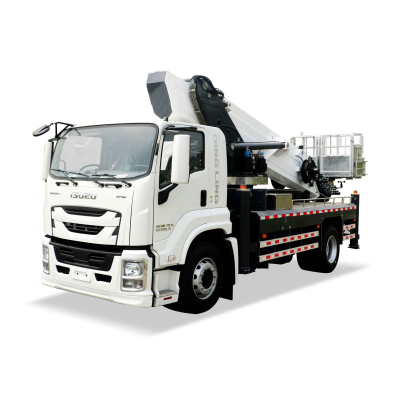
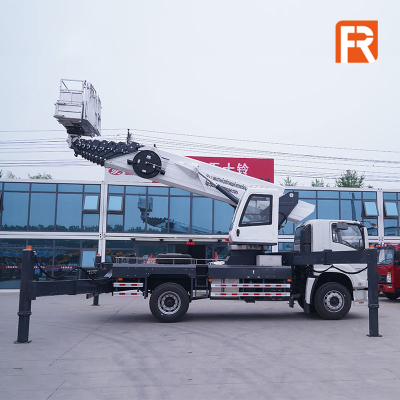
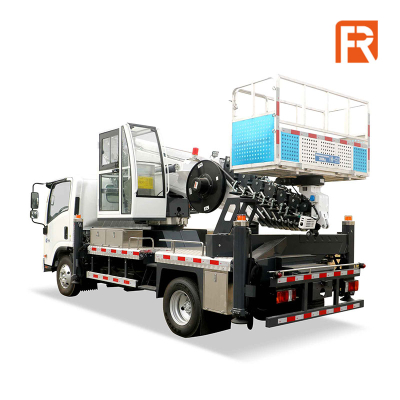
It has a retractable boom and a work platform that can be rotated at will. The entire structure is installed on a traditional truck chassis. It is very convenient to transfer. Some models have a maximum operating height of up to 75 meters and are widely used in building exterior wall decoration, large steel structure installation and maintenance and other operations.
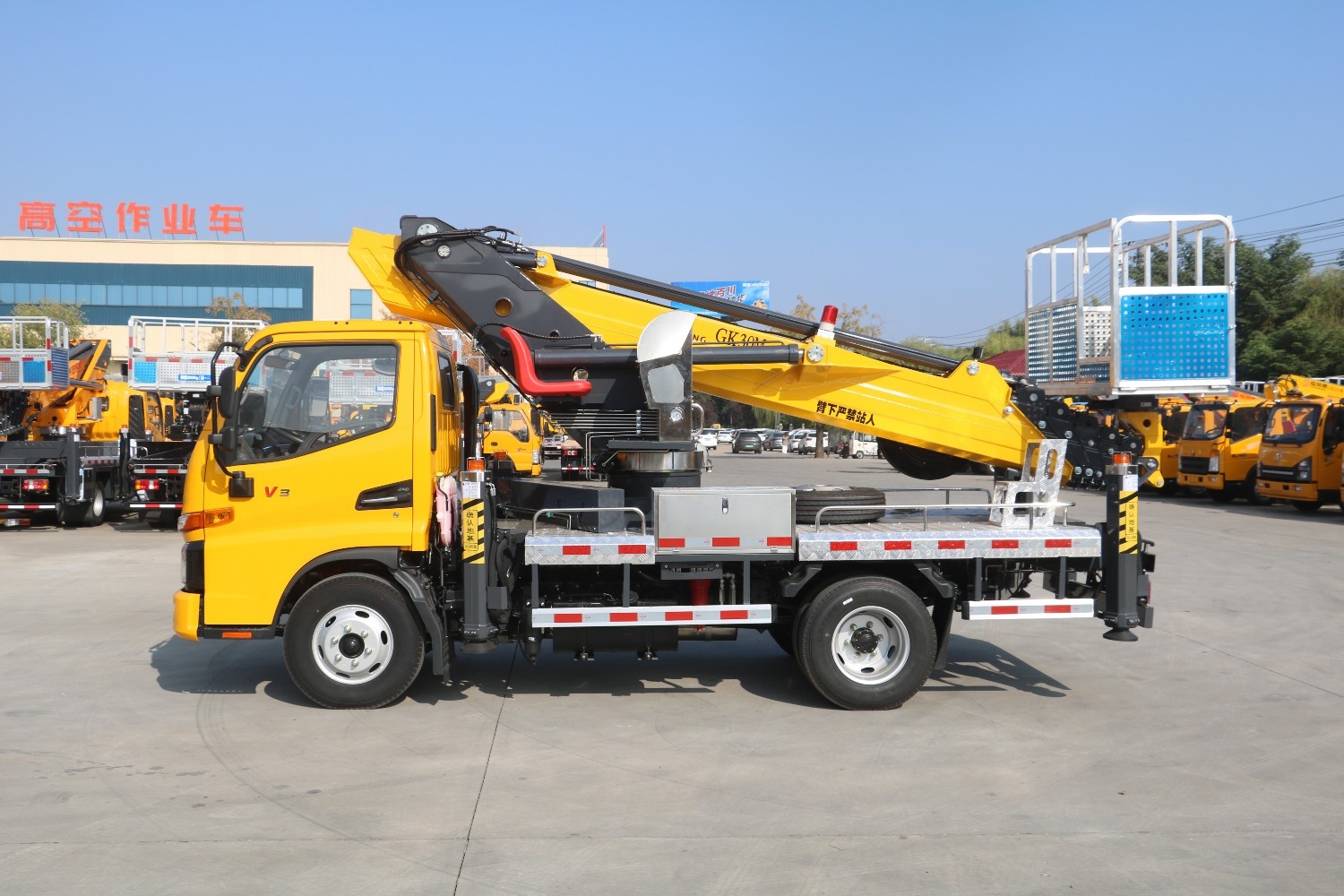
Boom Lifts
Likely the most common type of AWP, boom lifts are recognizable by the boom arm that lifts the platform. Boom lifts can reach up to 100 feet away, depending on the manufacturer and model. Some even have a turntable, so the lift has 360-degree rotation.
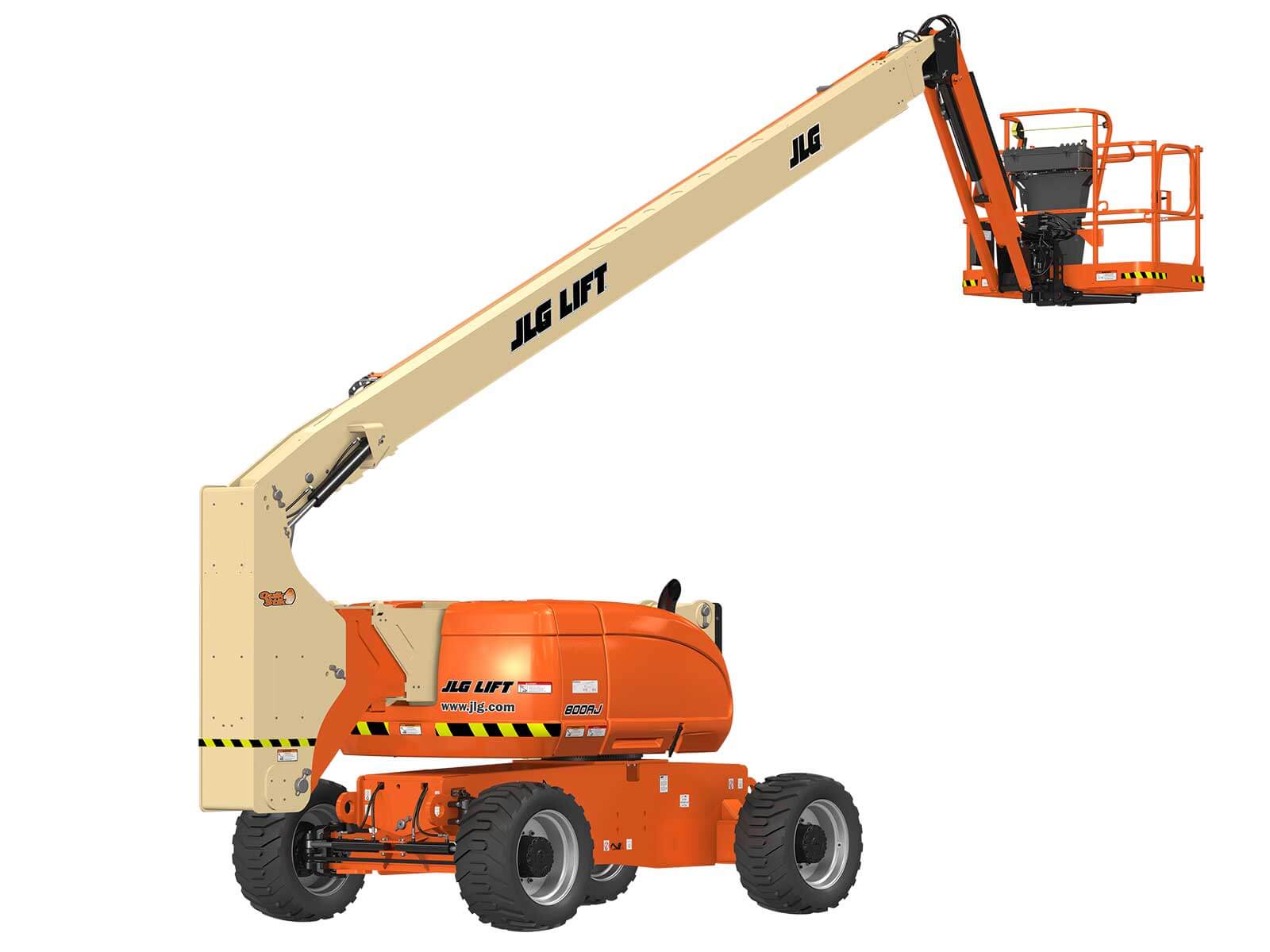
Boom Lift Variations
Articulated Boom Lifts - have multiple joints in their arms, making them better to maneuver in hard-to-reach places. Sometimes, they are referred to as knuckle booms. They’re especially useful for electrical work and piping repairs.
Telescopic Boom Lifts - have an extending arm that gives them a longer reach. You can regularly find people using these for highly-specialized jobs that require a lot of reach and a straight angle.
Cherry Pickers - have a jointed arm mounted to the top of a truck. Although it has a shorter reach than other boom lifts, it’s much better at moving around quickly. The cherry picker is aptly named for its usefulness in tree trimming and fruit picking.
Scissor Lifts
These compact machines might not look like other aerial work platforms, but they’re just as useful. Scissor lifts use an accordion-style support system to raise or lower people and materials– anywhere from 20 to 50 feet. They can’t extend laterally, but that often works to the machine’s advantage. The combination of their lifting ability and their especially wide work platform make them popular for jobs that require plenty of room, like building repairs and window installation.

Scissor Lift Variations
Electric Scissor Lifts - run on electricity. These machines are quieter and better for the environment, but aren’t as powerful as other varieties. Usually, you can find these in indoor operations.
Should You Rent or Buy an Aerial Work Platform?
Whichever aerial work platform you choose, it will be a significant financial investment. Even after you decide on an AWP, you still need to consider how to acquire it. Depending on your situation, both renting and owning an AWP can be equally advantageous.
Owning your own equipment has distinct advantages. If you own the equipment, you don’t have to worry about whether the rental yard has an AWP. Additionally, you don’t have to compete with other contractors to find the equipment you need. The only downside to buying the equipment is that the upfront investment is huge. You will also be responsible for the maintenance and storage of the equipment. If you anticipate using the AWP on a regular basis, then buying the AWP is a wise choice.
On the other hand, renting relieves you of a lot of responsibility. The company you rent from will take care of maintenance issues and storage costs. If you rent, you also have considerable control over your spending. Once you’re done using the equipment, you can rent it out directly and save money. If you don’t typically work at height, it can be worthwhile to simply rent the lifting equipment for your project and then rent it out again when you’re done.
If you’re not sure what equipment you need, the best thing to do is to consult an expert. At Rufunkang, we want to provide you with an unparalleled buying experience. Visit our agents in over 30 countries around the world and see for yourself why we are the better way to rent