7 Fascinating Types of Aerial Work Platforms: Which One is Right for Your Project?
Aerial Work Platforms are versatile machines designed to provide safe and efficient access to elevated areas. With various types available, such as Furunkang Aerial Work Platforms, choosing the right AWP for your project can significantly impact productivity and safety. This guide provides an AWP comparison, including options like Furunkang Aerial Work Platforms, to help you select the best equipment for your needs.
![Aerial Work Platforms]() 1. Scissor Aerial Work Platforms
1. Scissor Aerial Work Platforms
 1.
1. Description: Scissor Aerial Work Platforms use a crisscrossing (scissor-like) mechanism to elevate a platform vertically. They are stable and provide a large working area.
Best For: Indoor tasks, maintenance work, and projects requiring vertical elevation.
Key Features:
Stable and spacious platform.
Electric models are ideal for indoor use (quiet and emission-free).
Limited horizontal reach.
Applications: Warehouses, construction sites, and facility maintenance.
AWP Comparison: Ideal for vertical tasks but not suitable for reaching over obstacles.
![Aerial Work Platforms]() 2.Boom Aerial Work Platforms (Articulating and Telescopic)
2.Boom Aerial Work Platforms (Articulating and Telescopic)

Description: Boom Aerial Work Platforms feature an extendable arm (boom) that can reach both vertically and horizontally. They come in two types: Articulating Booms: Multiple hinged sections for flexibility. Telescopic Booms: Straight, extendable arm for maximum reach.
Best For: Outdoor projects, construction, and tasks requiring access over obstacles.
Key Features:
Greater reach and flexibility compared to scissor Aerial Work Platforms.
Available in electric, diesel, and hybrid models.
Applications: Building exteriors, tree trimming, and industrial maintenance.
AWP Comparison: Best for projects requiring both vertical and horizontal reach.
![Aerial Work Platforms]() 3.Vertical Mast Aerial Work Platforms
3.Vertical Mast Aerial Work Platforms

Description: Compact and lightweight, vertical mast Aerial Work Platforms provide vertical elevation with a small footprint.
Best For: Indoor tasks in tight spaces.
Key Features:
Small footprint for narrow aisles and confined spaces.
Limited platform size and reach.
Applications: Retail stores, warehouses, and indoor maintenance.
AWP Comparison: Perfect for confined spaces but limited in height and platform size.
![Aerial Work Platforms]() 4.Spider Aerial Work Platforms (Compact Crawler Aerial Work Platforms)
4.Spider Aerial Work Platforms (Compact Crawler Aerial Work Platforms)

Description: Spider Aerial Work Platforms are lightweight, compact, and often feature articulating booms. They are designed for uneven terrain and confined spaces.
Best For: Outdoor projects with uneven ground or limited access.
Key Features:
Stabilizing outriggers for uneven terrain.
Lightweight and portable.
Applications: Landscaping, bridge maintenance, and urban construction.
AWP Comparison: Excellent for challenging terrains but may have limited reach compared to larger boom Aerial Work Platforms.
![Baoliwei Aerial Work Platforms]() 5. Towable Boom Aerial Work Platforms
5. Towable Boom Aerial Work Platforms

Description: Mobile boom Aerial Work Platforms that can be towed to a job site and set up quickly.
Best For: Projects requiring frequent relocation of equipment.
Key Features:
Easy to transport and set up.
Limited reach compared to self-propelled boom Aerial Work Platforms.
Applications: Event setups, small construction projects, and maintenance tasks.
AWP Comparison: Great for mobility but less powerful than truck-mounted or self-propelled models.
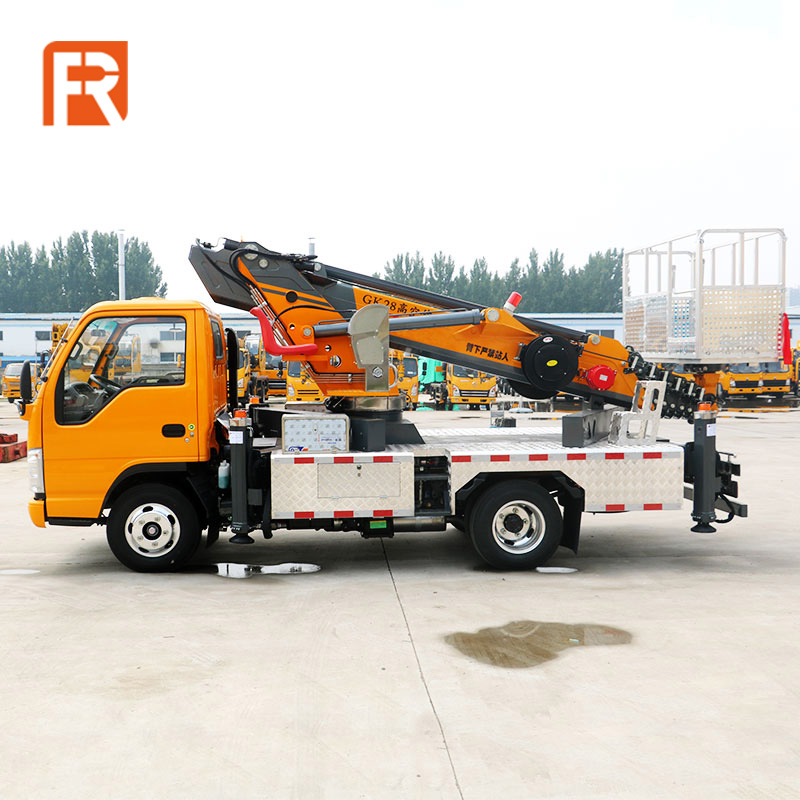
![Baoliwei Aerial Work Platforms]() 6.Truck-Mounted Aerial Platforms
6.Truck-Mounted Aerial Platforms

Description: AWPs mounted on trucks, providing mobility and high reach capabilities.
Best For: Utility work, street lighting maintenance, and emergency services.
Key Features:
High reach and mobility.
Self-contained and ready for use upon arrival.
Applications: Utility maintenance, sign installation, and emergency repairs.
AWP Comparison: Ideal for high-reach tasks but less maneuverable in tight spaces.
![Aerial Work Platforms]() 7.Personal Portable Aerial Work Platforms
7.Personal Portable Aerial Work Platforms

Description: Small, lightweight Aerial Work Platforms designed for one or two workers, often used for low-height tasks.
Best For: Light-duty tasks in confined spaces.
Key Features:
Compact and easy to maneuver.
Limited height and weight capacity.
Applications: Retail, hospitality, and small-scale maintenance.
AWP Comparison: Best for low-height, light-duty tasks but not suitable for heavy-duty projects.
AWP Comparison: Key Factors to Consider
When choosing the right Aerial Work Platform (AWP) for your project, consider the following factors:
1.Height and Reach Requirements: Determine the maximum height and horizontal reach needed.
2.Workspace Conditions: Assess whether the project is indoors or outdoors, and if the terrain is flat or uneven.
3.Platform Capacity: Ensure the platform can support the weight of workers, tools, and materials.
4.Mobility and Portability: Consider how often the equipment needs to be moved and the available space for setup.
5.Power Source: Choose between electric (for indoor/quiet environments) or diesel (for outdoor/rugged use).
6.Budget: Compare rental vs. purchase options based on project duration and frequency of use.

Conclusion
Choosing the right Aerial Work Platforms, such as Baoliwei Aerial Work Platforms, depends on your project’s specific needs, including height, reach, workspace conditions, and budget. Whether you need a scissor lift for indoor maintenance or a boom lift for outdoor construction, this AWP comparison guide, featuring options like Baoliwei Aerial Work Platforms, will help you make an informed decision. By selecting the right Aerial Work Platforms, including Baoliwei Aerial Work Platforms, you can maximize productivity, enhance safety, and achieve your project goals with ease.